Creating a New Culture of Learning Through Significant Learning Environments
Education is currently facing a major disconnect: students live in an active, connected, and team-oriented world, yet many classrooms still rely heavily on passive learning. This mismatch creates disengagement, limits deeper learning, and prevents students from developing the skills necessary for success in a rapidly changing world. Creating significant learning environments, CSLE meets this challenge by shifting learning from passive content delivery to active, authentic, and collaborative experiences that prepare students for lifelong learning.


The Problem: Passive Learning in an Active World
Thomas and Brown (2011) argue that learning is no longer simply preparation for life; learning is life itself. This idea fundamentally reshapes how learning environments must be designed. Instead of focusing on memorization and compliance, teachers must cultivate environments where students explore, collaborate, and create knowledge. This philosophy is directly consistent with my innovation plan from EDLD 5305, which focuses on implementing digital portfolios to promote choice, ownership, voice, and authentic learning (COVA).
Digital portfolios create opportunities for students to participate in learning collectives, which Thomas and Brown (2011) describe as communities where learners collaboratively develop knowledge. Through digital portfolios, students document their learning, reflect on growth, and share their work with peers. This process allows students to learn from one another and contribute purposefully to a shared learning environment. Rather than viewing learning as an individual task, students begin to see it as a shared, evolving process.
Another important concept from A New Culture of Learning is collective indwelling, which occurs when learners engage themselves in a shared environment and build understanding together. My innovation plan supports this idea by motivating students to continuously build and improve their digital portfolios. As students observe peer work, share feedback, and reflect on their learning, they become part of a group learning experience that deepens understanding and engagement.
Thomas and Brown (2011) also emphasize a shift from explaining to cultivating. Traditionally, teachers have focused on delivering information, but in a new culture of learning, teachers cultivate settings in which learning emerges through exploration and inquiry. My role shifts from being the primary source of information to designing experiences that encourage curiosity, creativity, and reflection. This shift transforms students into engaged participants rather than inactive receivers of information.


Bounded environments are another key concept that supports my innovation plan. Thomas and Brown (2011) describe bounded environments as structured learning spaces that allow creativity and exploration through defined parameters. Digital portfolios provide this structure by offering clear expectations while still allowing students to demonstrate creativity and ownership of their learning. This balance supports students as they continue to develop independence and critical thinking skills.
Additionally, the concept of implied knowledge has a significant role in creating significant learning environments. Tacit knowledge develops through experience, experimentation, and reflection rather than through direct instruction (Thomas & Brown, 2011). Digital portfolios encourage students to reflect on their learning process, document growth, and demonstrate understanding over time. This deeper level of learning supports long-term retention and meaningful understanding.
Anticipated Challenges and Solutions
Implementing this innovation also requires addressing potential challenges such as teacher resistance, time constraints, and assessment concerns. Resistance to change is common when shifting instructional practices, especially when teachers feel overwhelmed or uncertain. To address this, professional learning will concentrate on collaboration, modeling, and ongoing support. Teachers will have opportunities to see examples, team up with peers, and gradually implement digital portfolios in manageable phases.


Time constraints also present a challenge, but digital portfolios can be integrated into existing assignments rather than adding additional work. This approach makes sure that teachers can implement the innovation without feeling burdened by additional responsibilities. Additionally, assessment concerns will be addressed through rubrics and reflection tools that support authentic assessment practices.
Anticipated Challenges and Solutions
Challenge 1: Resistance to Change
Many educators and stakeholders are accustomed to standard models.
Solution:
- Share research and examples of success.
- Start small with pilot implementations.
- Highlight student engagement and outcomes.
Challenge 2: Time and Curriculum Constraints
Designing meaningful learning experiences requires time and flexibility.
Solution:
- Integrate CSLE principles into the existing curriculum rather than replacing it entirely.
- Use cross-disciplinary approaches to strengthen impact.
- Prioritize depth instead of scope.
Challenge 3: Assessment Practices
Standardized testing can conflict with deeper learning goals.
Solution:
- Incorporate authentic assessments alongside required measures.
- Use portfolios, projects, and reflections to demonstrate learning.
- Advocate for balanced assessment practices.

Encouraging Broader, Holistic Thinking
To move toward a CSLE, educators have to think outside individual lessons or tools and consider the entire learning experience. This includes:
- Understanding how the environment, culture, and mindset shape learning
- Viewing learners as active agents rather than unengaged learners
- Designing systems, not just activities
We can support this shift by:
- Taking part in collaborative planning and reflection
- Providing professional learning focused on design thinking
- Encouraging experimentation and mutual learning among teachers
A Foundational Perspective for the Future
This perspective is not a temporary strategy; it is a basic change in how I view learning, teaching, and leadership. It influences:
- How I design learning experiences
- How I support and collaborate with others
- How I measure success
Creating significant learning environments is not about adding more; it is about rethinking what matters. By aligning our practices with the realities of a changing world, we can develop learners who are not simply knowledgeable but also capable, curious, and prepared for lifelong learning.
Beyond classroom changes, this innovation promotes institutional impact by building a shared culture of learning across the campus. As teachers collaborate and students share learning experiences, the school begins to function as a learning collective. This shift supports collaboration, innovation, and continuous improvement, in line with the principles of a significant learning environment.
Encouraging broad and holistic thinking is also key to this innovation. Students will engage in reflection, make connections across content areas, and demonstrate learning in purposeful ways. This approach fits with Dweck’s (2006) growth mindset, in which students view learning as a continuous process, and with Wiggins and McTighe’s (2005) backward design, which focuses on meaningful learning outcomes.
Creating a New Culture of Learning requires progressing beyond traditional instruction and accepting environments where:
- Learning is active and meaningful.
- Students collaborate and contribute.
- Reflection is ongoing
- Creativity and ownership are encouraged.
- Learning goes beyond the classroom.
By implementing digital portfolios and creating significant learning environments, this innovation shifts learning from passive instruction to active participation, aligning with Thomas and Brown’s (2011) vision of a New Culture of Learning that prepares students for a world of constant change.
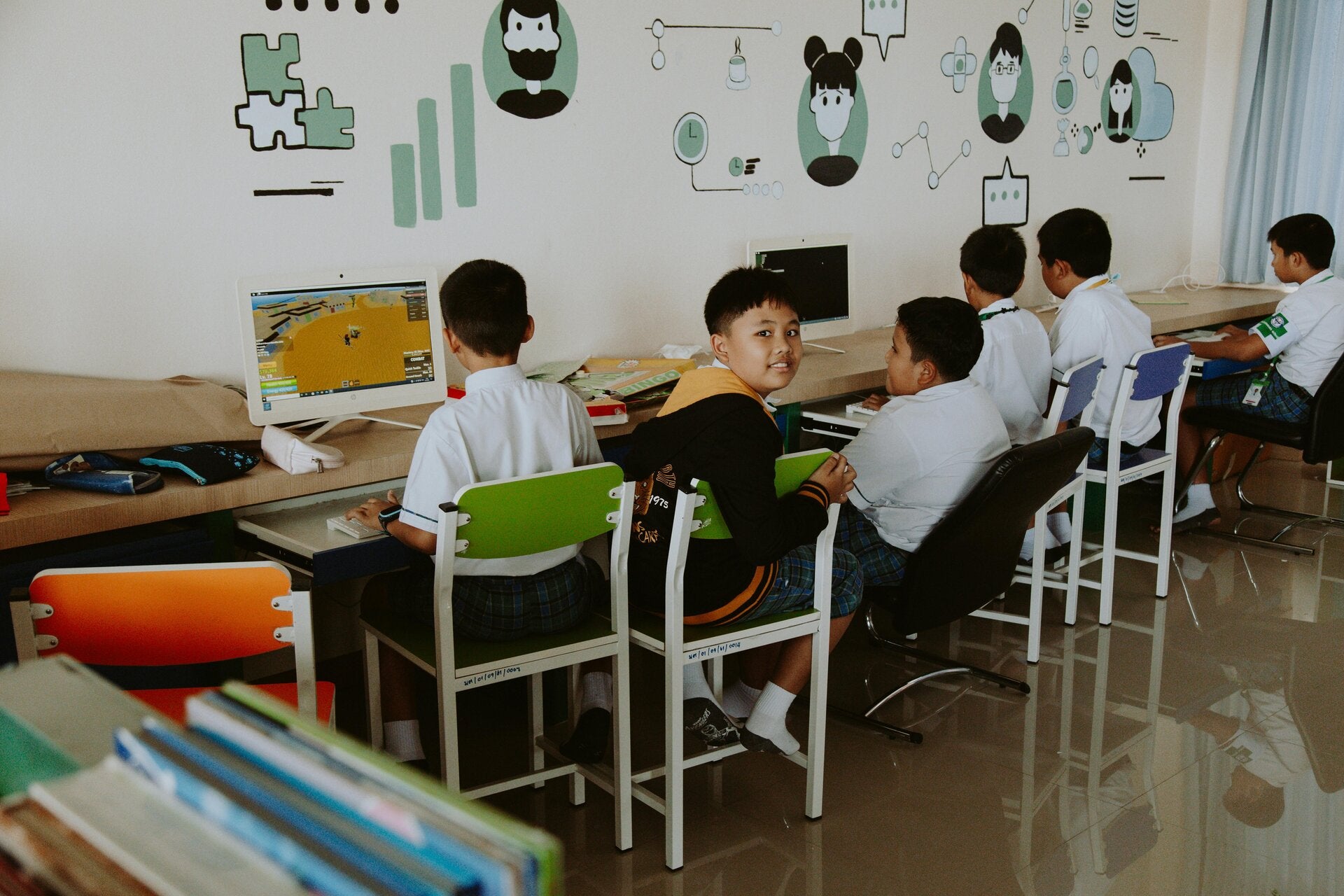
Impact on My Organization
Adopting a CSLE approach will fundamentally shift our school culture:
- From compliance to engagement
- From content delivery to learner empowerment
- From isolated teaching to collaborative learning ecosystems
This shift aligns directly with my innovation plan, which aims to implement a 1:1 device initiative supported by blended learning, student ePortfolios, and COVA (Choice, Ownership, Voice, and Authentic learning) principles to create more meaningful and personalized learning experiences. My plan focuses on empowering students to take ownership of their learning, reflect on their growth, and demonstrate understanding through authentic digital artifacts rather than solely through traditional assignments. By integrating blended learning strategies and ePortfolios, students will have increased opportunities for collaboration, creativity, and self-directed learning. A CSLE provides the philosophical and practical foundation needed to ensure that innovation is not simply implemented, but sustained and meaningful.
Closing
The transition to a CSLE is both a difficulty and an opportunity. It demands intentional design, cultural change, and sustained effort. However, the result is a learning environment that truly prepares individuals regarding the complexities of the modern world, an outcome that corresponds with both our organizational goals and our responsibility as educators.
References
Dweck, C. S. (2006). Mindset: The new psychology of success. Random House.
Thomas, D., & Brown, J. S. (2011). A new culture of learning: Cultivating the imagination for a world of constant change. CreateSpace.
Wiggins, G., & McTighe, J. (2005). Understanding by Design (Expanded 2nd ed.). Pearson.